Home/Technologies
Technologies
The equipment we use on your cases, and what each one means for the fit, strength and look of the finished work.
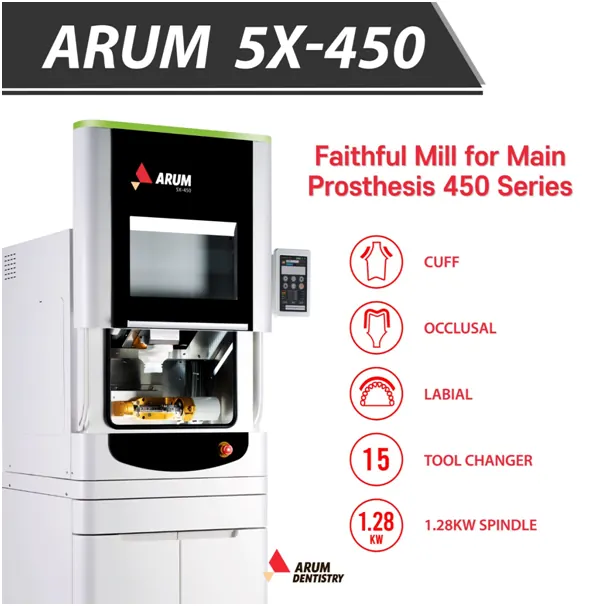
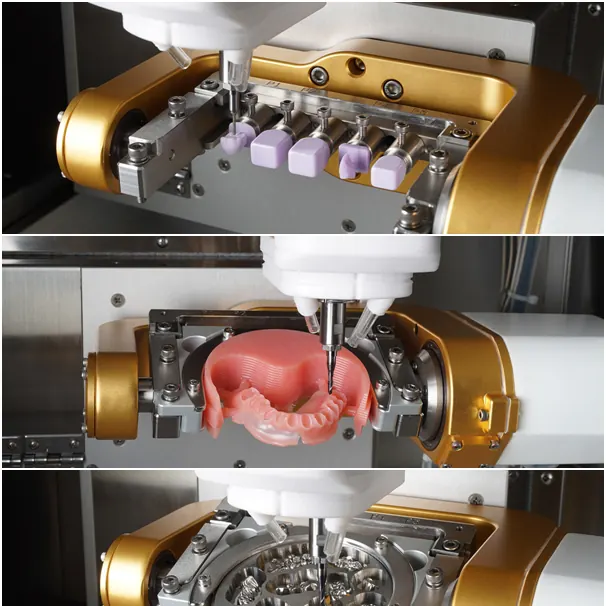
5-axis milling on the ARUM 5X-450
Most of our crowns, bridges and implant parts are milled in our own lab on a 5-axis wet and dry milling machine. For you, that means restorations cut straight from the digital design, in the material that suits the case.
Materials we mill
- Zirconia: crowns and bridges, from single units to full arch
- IPS e.max: crowns, veneers, inlays and onlays
- Titanium: customised abutments, bars and screw-retained frameworks
- PEEK: light, metal-free frames for implant prostheses
- Zantex, graphene and HIPC: metal-free frameworks and long-term restorations
- Composites, PMMA and wax: temporaries, mock-ups and try-ins
What it means for your cases
- Precise fit: 5-axis milling reaches undercuts and angled screw channels, so restorations seat with little adjustment
- The right material for every case, without sending work to another lab
- Each material is cut the way it needs, wet or dry, for clean margins and smooth surfaces
- The same accuracy on every case, because the machine calibrates itself and changes its own tools
- Faster delivery, because design and milling happen under one roof
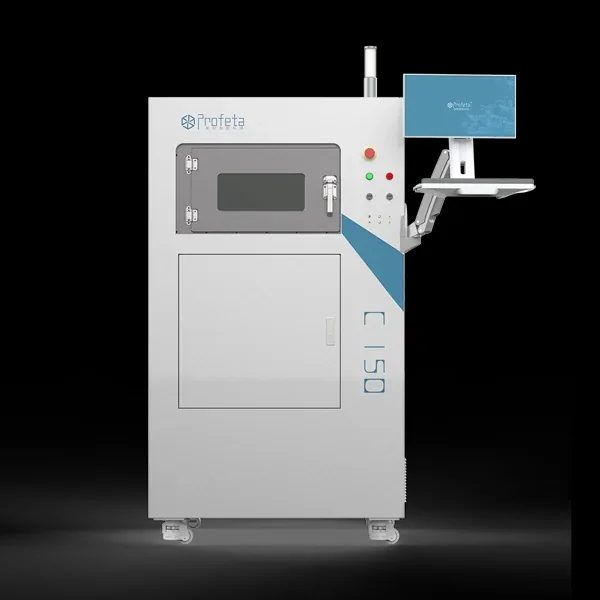
Profeta C150 DMLS metal 3D printer
The Profeta C150 is a metal 3D printer built for dental work. A laser melts fine cobalt-chromium powder layer by layer, straight from the CAD design, so metal frameworks are printed instead of cast.
What it means for your cases
- Accurate, repeatable fit: every coping and framework follows the digital design, with no wax-up and no casting distortion
- Dense, uniform metal without the porosity that casting can leave
- Thin, even copings and clean margins
- Shapes that are hard to cast, such as long-span bridges, telescopic copings and non-rigid connectors
- Faster turnaround, because many units are printed in one build
- The same result from case to case
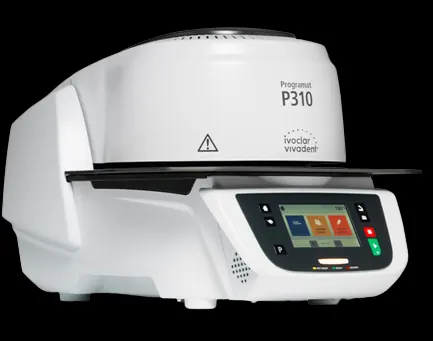
Ceramic firing in the Programat P310 G2
The ceramic layers on our metal-ceramic and zirconia work are fired in an Ivoclar Programat furnace. It controls drying and firing temperatures closely, so the ceramic matures the way the material is designed to.
What it means for your cases
- Shade and translucency that match the prescription, case after case
- Fewer cracks and bubbles in the ceramic, so fewer remakes
- Smooth, well-glazed surfaces that are kind to opposing teeth
- Reliable staining and glazing on IPS e.max and zirconia
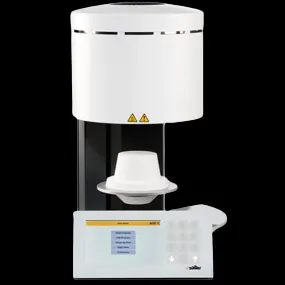
Even firing in the Zubler Vario 230
The Zubler Vario 230 keeps the same temperature across the whole firing tray. Every unit of a bridge gets the same firing, wherever it sits in the furnace.
What it means for your cases
- Uniform shade along long-span bridges and full-arch work
- The same result whether we fire one crown or many together
- Consistent ceramic quality from one case to the next
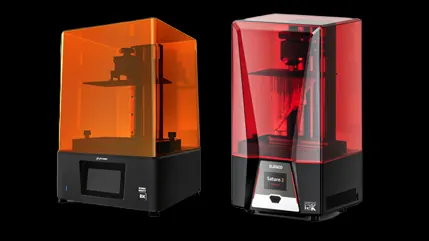
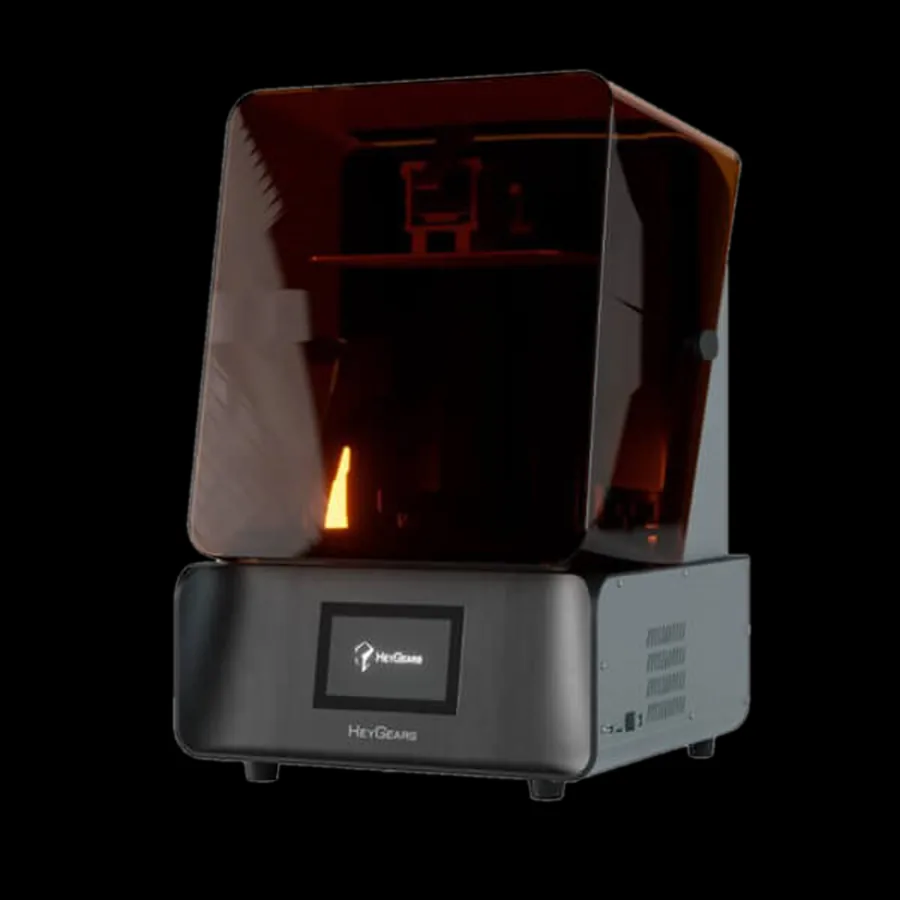
Resin 3D printing
Our resin 3D printers turn intraoral scans and digital designs into physical parts within hours, with no stone model in between.
What we print
- Models from intraoral scans
- Night guards and splints
- Temporary crowns and bridges
- Digital mock-ups and try-ins
What it means for your cases
- Send a scan instead of an impression: no impression material, no pouring, no courier for the first step
- Models without the distortion of impression and stone
- Faster turnaround on temporaries and try-ins
- Patients can see and approve a mock-up before the final work is made
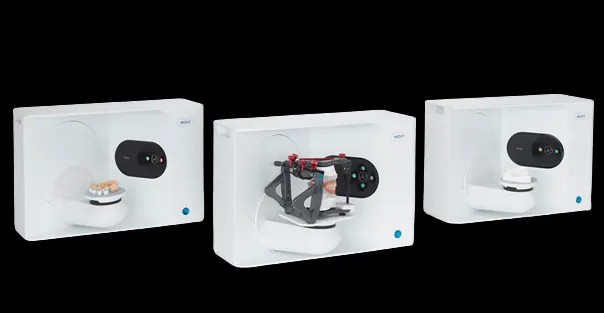
Digital scanning with Medit T-Series scanners
Every model and impression that reaches the lab is scanned on a Medit T-Series scanner. A full arch is captured in about 8 seconds, and the design starts from an accurate digital copy of your case.
What it means for your cases
- Margins and contacts are designed on screen at high magnification
- A more accurate fit, with less adjustment at the chair
- Cases start sooner, so delivery is faster
- Conventional impressions and intraoral scans are both accepted
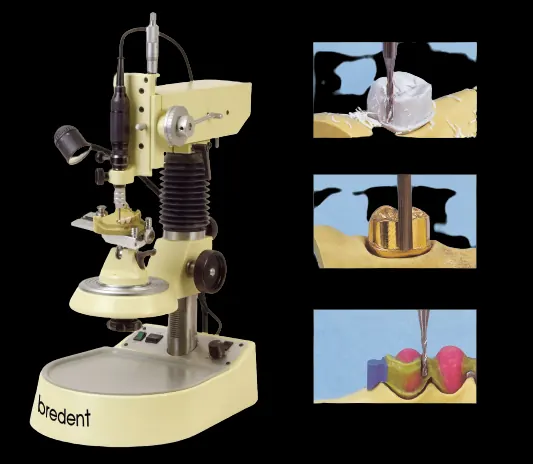
Parallel milling on the Bredent BF 2
The Bredent BF 2 is a precision milling unit and parallelometer. We use it to mill and check parallel surfaces on attachment and telescopic work.
What it means for your cases
- Precision attachments and telescopic copings share one path of insertion
- Removable parts seat smoothly and hold with even friction
- Less stress on abutment teeth and implants
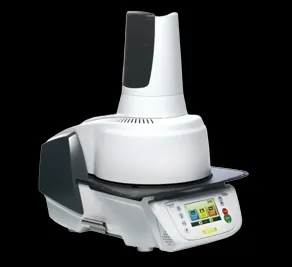
Pressed ceramics in the Programat EP 3010
IPS e.max press ceramics are pressed in an Ivoclar Programat EP 3010. The furnace controls the press force and temperature precisely and stops in time if the investment ring cracks.
What it means for your cases
- Dense, strong pressed crowns, veneers, inlays and onlays
- Accurate margins that follow the wax-up or the digital design
- Consistent results from one press to the next
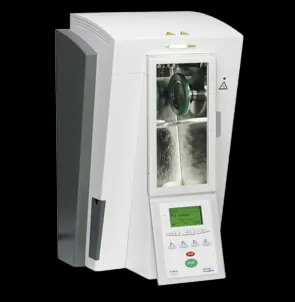
Injection-moulded dentures with Ivoclar BPS
Our BPS dentures are made with the Ivoclar injection technique using SR Ivocap High Impact denture base material. The material is injected under pressure, which compensates for shrinkage while it cures.
What it means for your patients
- A precise fit, without raising the bite
- A highly shock and fracture resistant denture base, also suited to implant-supported dentures
- A strong bond between the base and the teeth
- A dense, well-polished surface that stays clean
Micro-pulse welding with the Lampert PUK D5
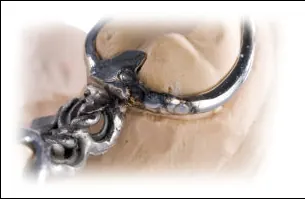
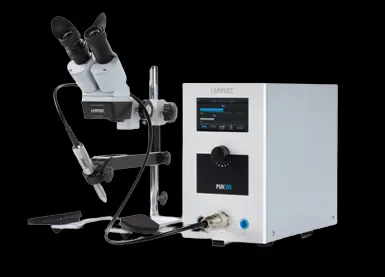
The Lampert PUK D5 joins metal with very short, precise welding pulses under a microscope. We use it in place of soldering on frameworks and repairs.
What it means for your cases
- Frameworks can be sectioned and welded for a passive fit
- Strong joints with no solder in the mouth
- Very little heat, so welding is possible close to ceramic and acrylic
- Quick repairs to clasps, bars and cast partial dentures